THE SHORT VERSION
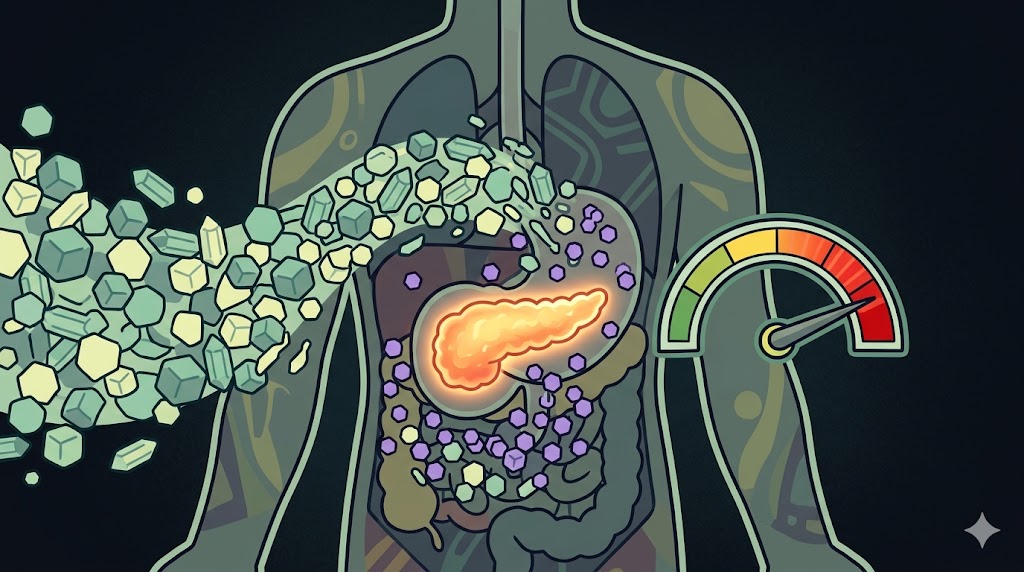
Fasting insulin can double over a five-year window while fasting glucose remains completely static. Most annual physicals report a glucose reading of 85 to 95 mg/dL and close the file. Underneath that stable number, the pancreas is quietly secreting two to three times more insulin to hold blood sugar in place. That compensation works flawlessly until it doesn’t, which is typically five to eight years after resistance begins. Standard lab reference ranges classify insulin levels up to 25 µIU/mL as normal, meaning a man can be deep into metabolic drift while his chart reads “within range.” The gap between a stable glucose number and a rising insulin baseline is where cardiovascular, cognitive, and inflammatory damage compounds unnoticed. A single inexpensive test captures the signal most panels omit. Why does the standard of care wait for the pancreas to exhaust itself before flagging the trend line?
The Data
The Kraft preclinical timeline. Kraft et al. (1979) mapped oral glucose tolerance curves across thousands of patients and demonstrated that elevated fasting insulin and delayed glucose clearance consistently precede fasting glucose elevation by 10 to 15 years [1]. The pancreas compensates for declining cellular sensitivity by increasing output. Fasting glucose remains stable until beta-cell function declines past a critical threshold. Operator translation: glucose is a lagging indicator. Insulin is the leading indicator that captures the compensation phase before the system breaks.
The reference range calibration problem. Reaven (1988) identified the metabolic cluster driven by insulin resistance, establishing it as the upstream mechanism linking hypertension, dyslipidemia, and impaired glucose tolerance [2]. Standard laboratory reference ranges are derived from population percentiles, not physiological optimality, and routinely classify fasting insulin up to 25 µIU/mL as normal. Clinical metabolic research indicates optimal insulin sensitivity correlates with fasting levels between 2 and 6 µIU/mL [3]. Operator translation: a reading of 14 µIU/mL will print as “normal” on a lab report while signaling early pancreatic overcompensation.
What moves the baseline. Sustained aerobic exposure and progressive resistance training increase skeletal muscle GLUT4 transporter expression, directly lowering the insulin requirement for glucose clearance. Ross et al. (2003) demonstrated that exercise-induced reductions in visceral adipose tissue improve insulin sensitivity independent of total body weight loss [4]. Conversely, chronic sleep restriction elevates baseline insulin through sustained sympathetic nervous system activation and altered counter-regulatory hormone release [5]. Operator translation: insulin demand is a function of muscular glucose uptake capacity, visceral fat volume, and autonomic recovery. It responds predictably to training volume and sleep architecture, not to pharmacological intervention.
The downstream cascade. Elevated fasting insulin correlates with increased C-reactive protein, arterial stiffness, and reduced free testosterone in men. The metabolic load precedes structural vascular damage by years, and cerebral insulin resistance tracks with early deficits in working memory and executive function [6][7]. Popular science coverage, including Peter Attia’s framing of insulin as “the canary in the coal mine,” synthesizes this cohort data to position fasting insulin as the earliest actionable metric for long-horizon metabolic health. Operator translation: the cardiovascular, cognitive, and hormonal costs are billed incrementally, not at diagnosis.
What This Means for Quality of Life
- Stable fasting glucose is not metabolic proof; it is frequently a sign of pancreatic overcompensation masking early resistance
- Standard lab reference ranges are calibrated to population averages that include metabolically compromised individuals, making “in range” functionally indistinguishable from early drift
- Fasting insulin responds predictably to sustained Zone 2 exposure, progressive resistance training, and consistent sleep architecture, all of which upregulate GLUT4 translocation without requiring dietary extremism
- Elevated baseline insulin drives chronic low-grade inflammation, suppresses free testosterone, and impairs cerebral glucose metabolism, compounding silently across a decade
- The metric is only useful when trended; a single reading establishes a baseline, but the slope across 24 to 48 months reveals whether lifestyle inputs are actually moving the underlying biology
- The standard of care is optimized to detect disease at diagnostic thresholds, not at the inflection point where behavioral adjustment remains effortless
The Longitudinal Question
A single fasting insulin reading establishes a coordinate, not a trajectory. The clinical system is optimized to detect disease at the threshold where intervention becomes mandatory, not at the inflection point where behavioral adjustment remains low-friction. Standard panels omit insulin because insurance structures reimburse for diagnostic coding, not preclinical drift tracking. At Nexus Bio, we treat metabolic biomarkers the way a serious operator treats leading indicators in a quarterly forecast: the absolute value is secondary to the direction and velocity of the trend. Synthesizing fasting insulin across years, alongside sleep architecture and training volume, reveals whether current habits are preserving mitochondrial function or quietly financing structural decline. External measurement closes the gap between a stable annual physical and the biological reality occurring underneath it.
The One Thing To Do This Week
Open the most recent bloodwork results. Look for "fasting insulin" or "insulin, fasting" as a line item. If it is not there, it was not measured. Most men over 30 who have been getting annual bloodwork for a decade have never had it tested once. The next time bloodwork is ordered, ask the physician to add fasting insulin to the panel. The test typically costs under $15 out of pocket and requires no additional blood draw — just an additional line on the existing order. If it is there, find the oldest result available and compare. The trend is the signal.
Nexus Bio is biological performance analytics for men who think in horizons, not quarters. Subscribe to the newsletter — one entry like this a week, delivered Tuesdays.